
Why DepletionIQ Exists: The Measurement Gap Between the Rickhouse and the Shelf
Craft distilleries move most of their volume through channels they cannot observe. A look at the structural reasons why, the market data behind it, and what closing the gap requires.
Read the post
Reorder Velocity: Measuring Account Health Between Monthly Reports
Monthly depletion reporting introduces a structural lag between a change in account behavior and the producer's awareness of it. A look at the arithmetic, and at the days-to-empty metric that closes it.
Read the post
How to Read a Distributor Depletion Report: A Craft Distiller's Guide
A field guide to the monthly distributor report — what each column measures, the interpretation errors that carry real cost, a repeatable review process, and the questions the format leaves open.
Read the post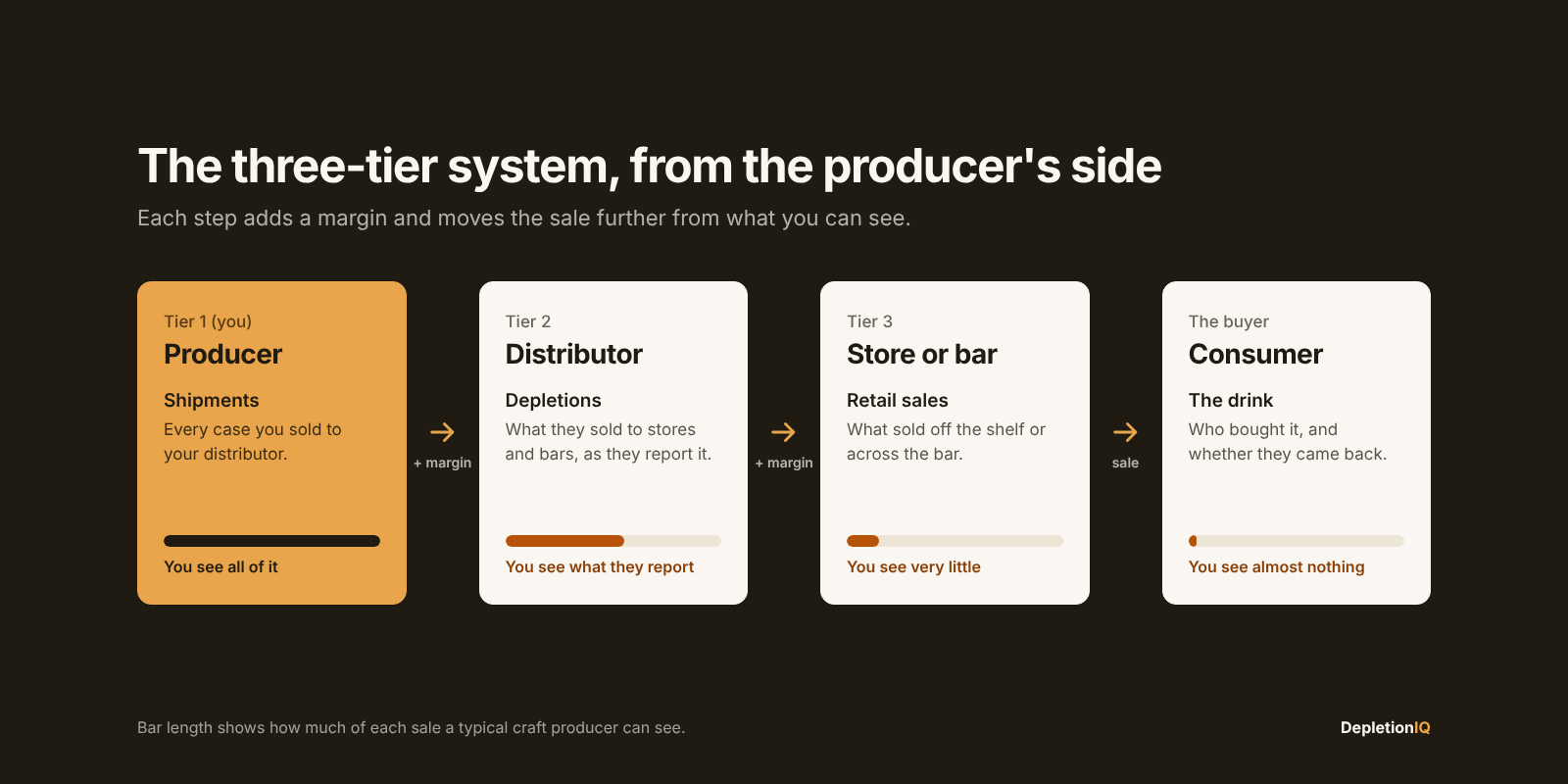
The Three-Tier System, From the Producer's Side: Where Your Sales Data Goes
Every case you sell passes through three tiers before anyone drinks it. Here's who owns it at each step, who sets the price, and how much of the sale you can actually see.
Read the post